So you’ve got your proposal written and ready to go. You’re on the same page with your client and everyone is onboard, ready to kick off the project.
Just one small detail – the proposal needs to be signed.
This might seem like an easy deal if you were handing out physical copies of your proposal document, but with our technologically driven world, it’s more likely that proposals like this will happen digitally.
Allowing a document to be signed with an e-signature can help speed up many different processes in the corporate world today. Even certain apps now ask users to input an E-signature to represent their consent to use that particular app. These situations have led to a rise in the number of people who use an E-signature regularly.
Since using an e-signature is a way to speed up a process that in another era would’ve required mountains of paperwork, it only makes sense that creating the signature would be just as simple as singing on a dotted line. It turns out that that’s precisely the case with the right tools.
Creating Proposals That Close Deals
So, back to your proposal. There’s no need to draft a boring long-form contract.
Instead, with a tool like Prospero, companies or professionals providing specific services can create proposals based on any of the available proposal templates.
Depending on what you want to achieve and the time on your hands, you can create your own proposal from scratch or find a suitable template – that is the first step toward closing the deal.
A good proposal should clearly outline what the client can expect to receive. When it comes to modern proposals, there’s no need to get too formal with the wording. Speaking of non-formal writing, a ton of text is not necessarily appealing to potential clients.
Therefore, picking a template with some visual appeal in the form of unique fonts and visual aids is a good starting point. Once those are set, users can easily change the text on the template to ensure that the client gets a custom proposal.

Prospero is a tool that does a great job when it comes to providing unique templates that are well presented to help guide the user to complete their envisioned proposal through the template. Even though there are plenty of templates to choose from, the process isn’t overwhelming.
Picking the perfect template can win half the battle. From there, it’s just about being fully transparent and concise with the client. This is essentially when the client must meet specific monetary terms.
Wrapping all that into a document that’s quick to read and easy on the eyes will close plenty of deals. The creative process is intuitive and light, even for people with little to no design experience.
Once you’re all done with that, you can focus on making your contracts legally binding, hence, adding your e-signature and your client’s.
Options for Signing Proposals
There are different ways to stamp digital proposals with e-signatures to get the ball rolling.
If you’re creating a proposal with our tool, you can easily add your e-signature without a fuss using any of these three options.

- Typing your signature
- Uploading a signature
- Drawing a signature
Other than that, there are other ways to complete the signature process for a proposal.
The type of file in which the client receives the proposal will determine their options when it comes time to sign.
Google Docs
With Google Docs files, there’s a way to download an extension that allows people to craft their E-signature.
Using an external program to craft an e-signature can add a layer of security to the operation. At the same time, there are ways to certify a signature as legally binding with external services. There’s also the easy option that involves just using a function on Google Docs that allows users to scribble their signature on the screen.
Another option that has fallen a bit out of favor is to use a picture of a hand-drawn signature. These can be validated via a PKI certificate as a legal signature. This process is more complex than the other two options. Despite this, some people may prefer it because of the added security layers.
The type of file a user is trying to sign can make the process easier or more complex. Keeping the proposal file within Google Docs or as a PDF can be a great way to make the process lighter on potential clients. That’s something worth taking into account when creating proposals.
How to Add E-signature to Google Doc Files
The easiest way to do this is to go to “Insert,” “Drawing,” and then “New.” Google Docs will open a window that will allow the user to draw their signature either with the mouse or their finger on a touch screen.
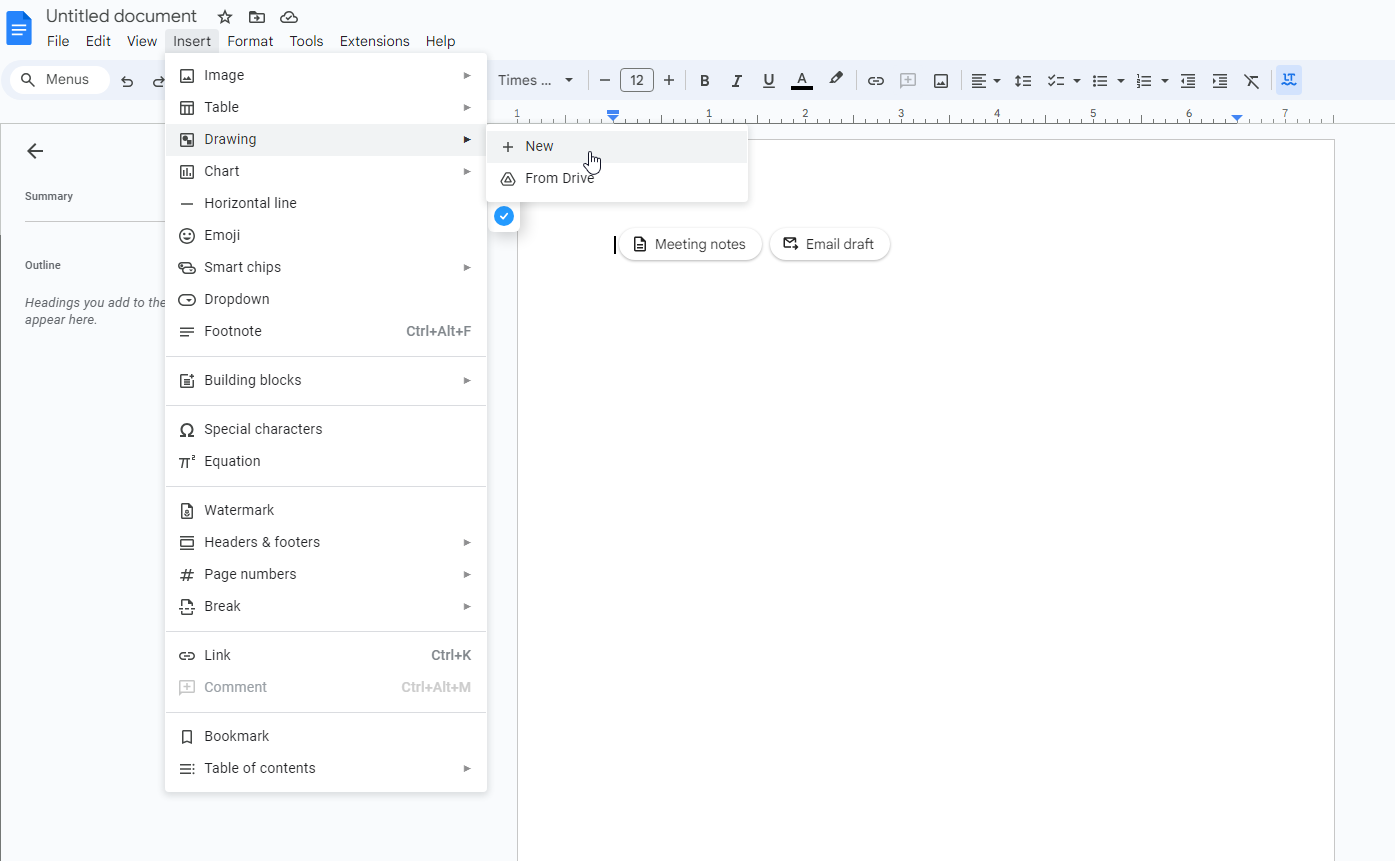
With this method, the system will save the signature in that person’s Google Drive for use in the future. The biggest problem with this method is that the signature has no legal backing. Certain documents may require some form of extra validation to become legally binding.
Alternatively a solution like DocHub can be used to authenticate proposals as well. Using DocHub can be considered the second method to add a signature to a Google Doc. DocHub is a company that offers solutions for signing documents.
It has a Google extension that users can activate on Google Docs. The process of creating a signature can be similar to one that Google Docs offers directly.

The main difference is that the signatures through DocHub have the company’s backing. This backing legitimizes the signature at a level that’s not obtained with a simple drawing. When neither of these two options is appealing, inserting an image of the signature on paper can do the trick.
When inserting an image of an actual handwritten signature, it’s always a good idea to ensure the picture is perfectly clear. Going the extra mile and making sure that the picture can be zoomed into to verify the signature makes it easier to validate.
Even if the proposal file is originally in Word format, it can easily be converted to a Google document. All that the user has to do is upload it to a Google Drive and then open it within the drive. That will make all of these options to add an E-signature that Google Docs offers available to them.
How to Add an E-signature to PDF Files
Adding a signature to a pdf file can be done in two different ways. You can either insert a picture of your signature as explained above or use a tool like DocHub to get the proposal signed.
If you have DocHub downloaded and added as an extension to your browser, opening the PDF through Google Drive will enable the DocHub feature if the extension is active.
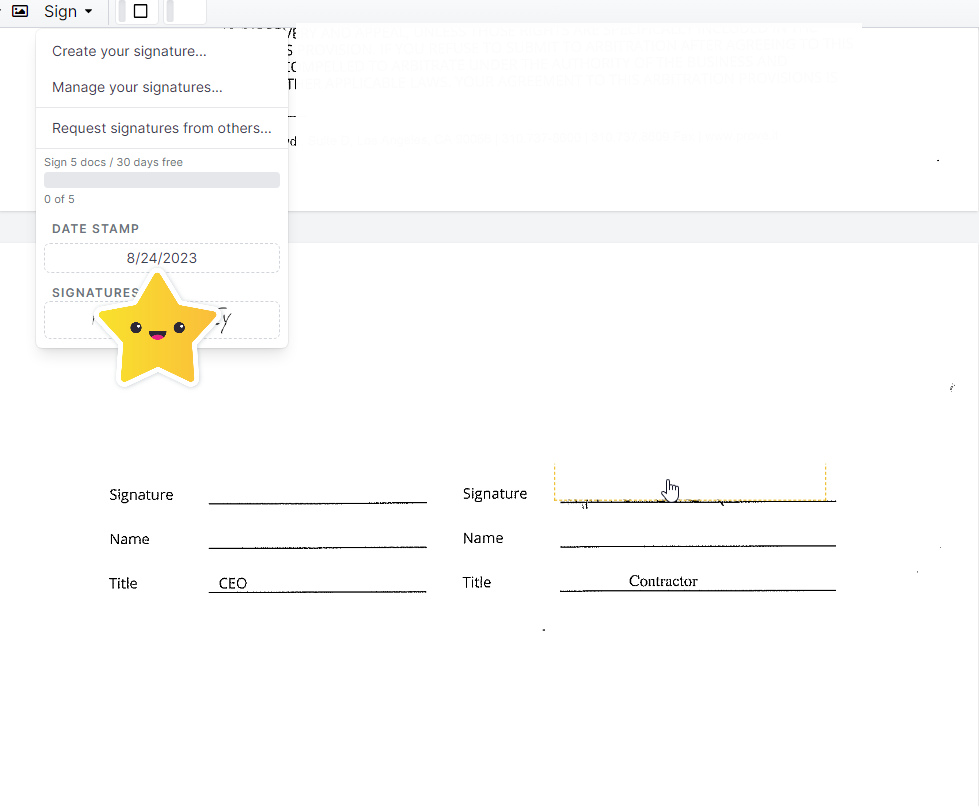
Then, there’s the option to add the signature from a picture file. That option may also require that the PDF opens with a program that allows for direct editing. Not all of the programs that run PDF files are going to enable editing.
Knowing that not all programs will allow edits to PDF files makes the DocHub option better. The DocHub site is accessible outside of Google Drive. In that case, the user must upload the PDF file directly to the site.
People who still want to use the picture file option can look for an external PDF editor tool. There are decent options available online; just a quick Google search away. Privacy may not be a priority for these sites; that’s another element to consider.
Wrapping Up
Knowing how to quickly and legally authenticate your proposals will save you a lot of time/back and forth with your clients. You’ve already done all the hard work of getting the deal, why waste time with signatures. Use any of the methods outlined to authenticate the legality of your contractual agreement.
What’s more? You can easily get your proposals created, sent and signed using our tool, prospero. It’s very easy to get started with it.
If you’re looking for more resources that’ll convince you, check out these related topics